
Trequanda History
Trequanda
The origin of the name “Trequanda” is uncertain. Some believe it comes from the Etruscan hero “Takonte,” while others trace it to the ancient word treguarda, referring to the town’s three gates, two of which remain today. Trequanda itself has adopted another interpretation: “three cups.” This symbol appears on the ceramic tiles marking the doorways throughout the village.
Trequanda’s history stretches back more than 2,000 years to Etruscan times, although most of the medieval village seen today was built between the 12th and 14th centuries. From about 1100 to 1300, the town was controlled by the powerful Cacciaconti della Scialenga family, who built a castle on the highest point of the village. Like many hill towns of the period, Trequanda was fortified to protect its inhabitants during the frequent conflicts between rival ruling families.
In the 16th century, Trequanda came under the control of the Republic of Siena. Following the fall of Siena, it became part of the Florentine state and later passed through the Napoleonic period before becoming part of the Grand Duchy of Tuscany. With the unification of Italy in 1861, Trequanda became part of the newly established Kingdom of Italy.
Cacciaconti Castle
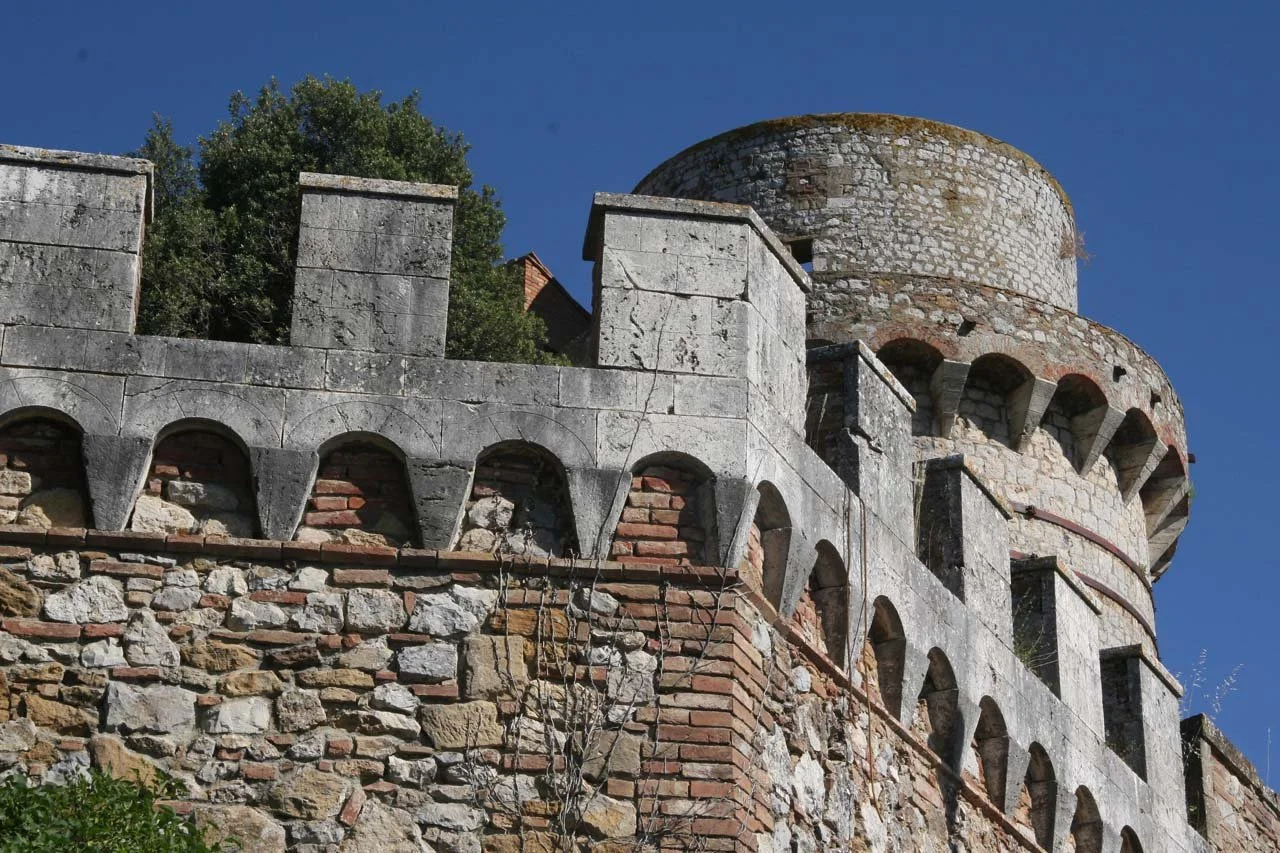
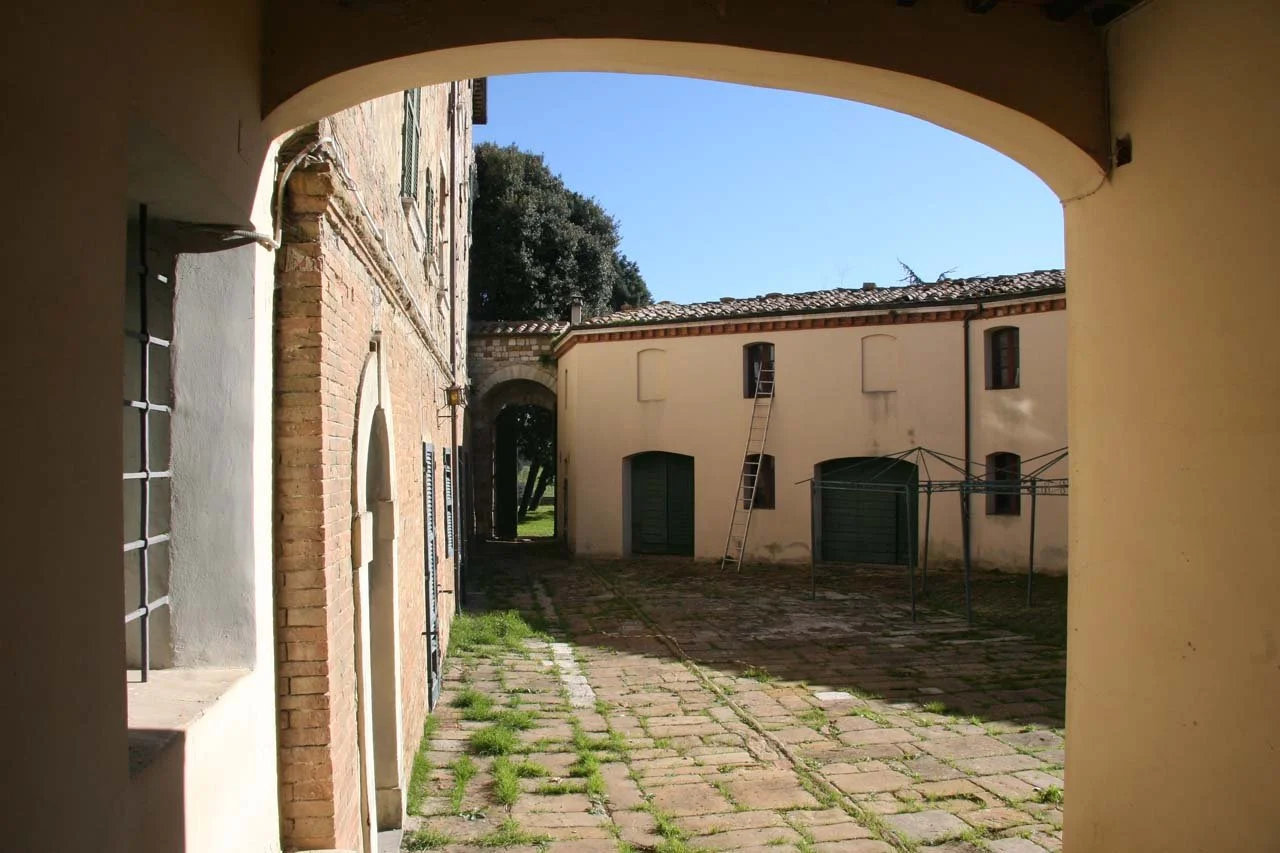
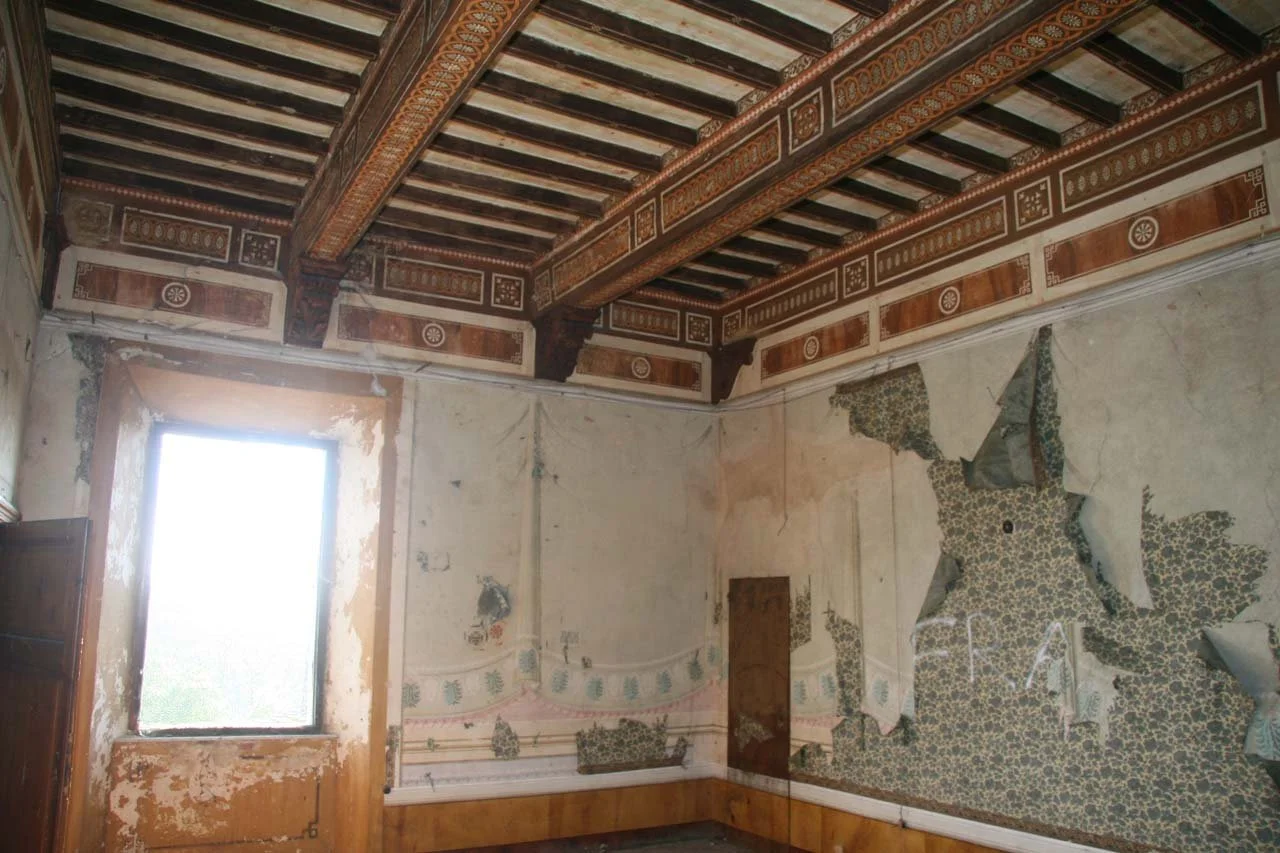
Cacciaconti Castle occupies the highest point in Trequanda, overlooking the historic road between Chiusi and Siena. Built as a defensive stronghold during the Middle Ages, the complex includes the count’s palazzo, a majestic cylindrical tower, a central courtyard, and a variety of former domestic and agricultural spaces, including a large traditional bread oven. At the western end is an intimate theater seating approximately 80 people.
The castle faces south across terraced gardens and enjoys beautiful views of the surrounding countryside. Its main entrance is on Piazza Garibaldi.
Today, the castle is used occasionally for village celebrations and festivals, including the annual Olive Festival in October. Plans have also been developed to restore the complex as a cultural center, with proposed spaces for a culinary institute and events center, music academy, and arts center devoted to the restoration of important works of art and archaeological artifacts.
Church of Saints Peter and Andrew
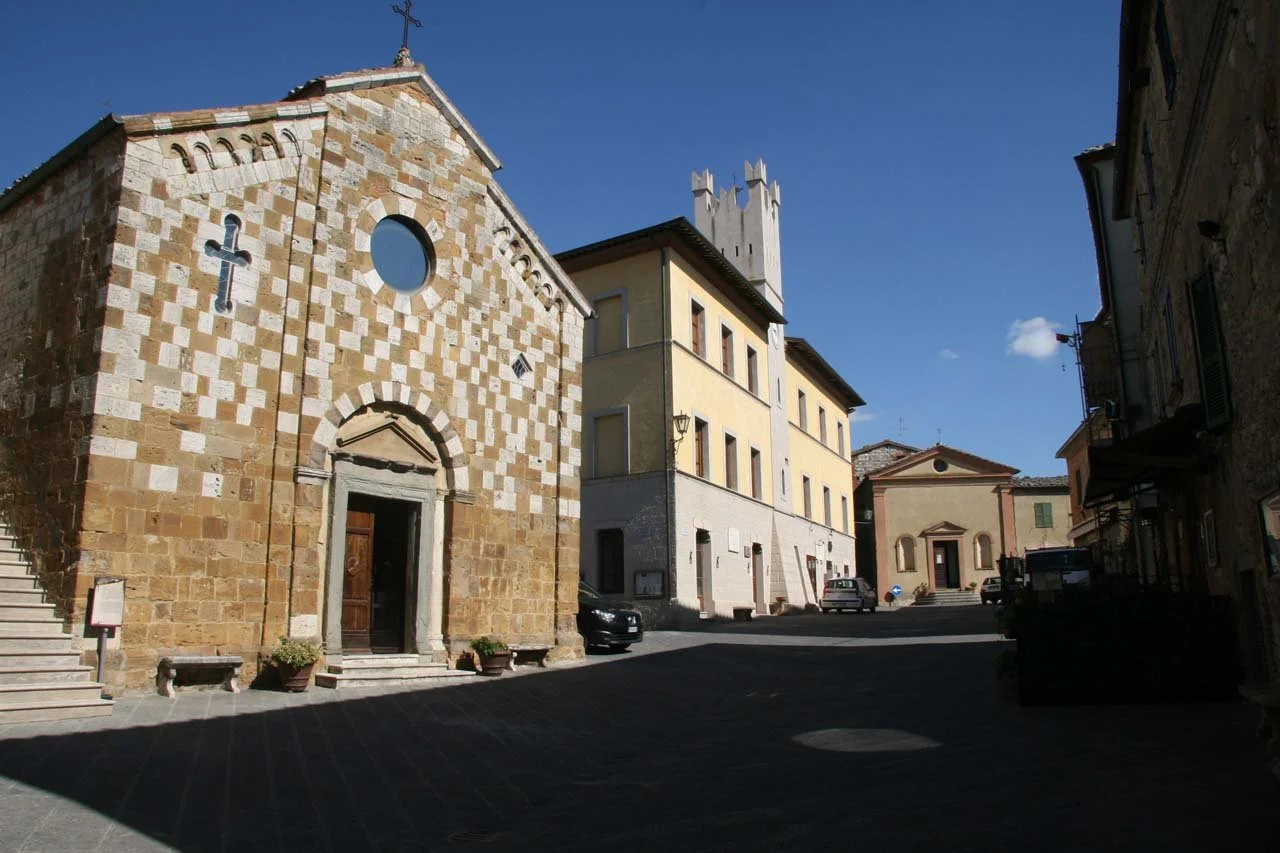
Located on Piazza Garibaldi, the Church of Saints Peter and Andrew is a Romanesque-Gothic church built in the 14th century on the site of an earlier church. Its distinctive façade is a checkerboard of white and ochre stone, created with alternating blocks of tufa and travertine.
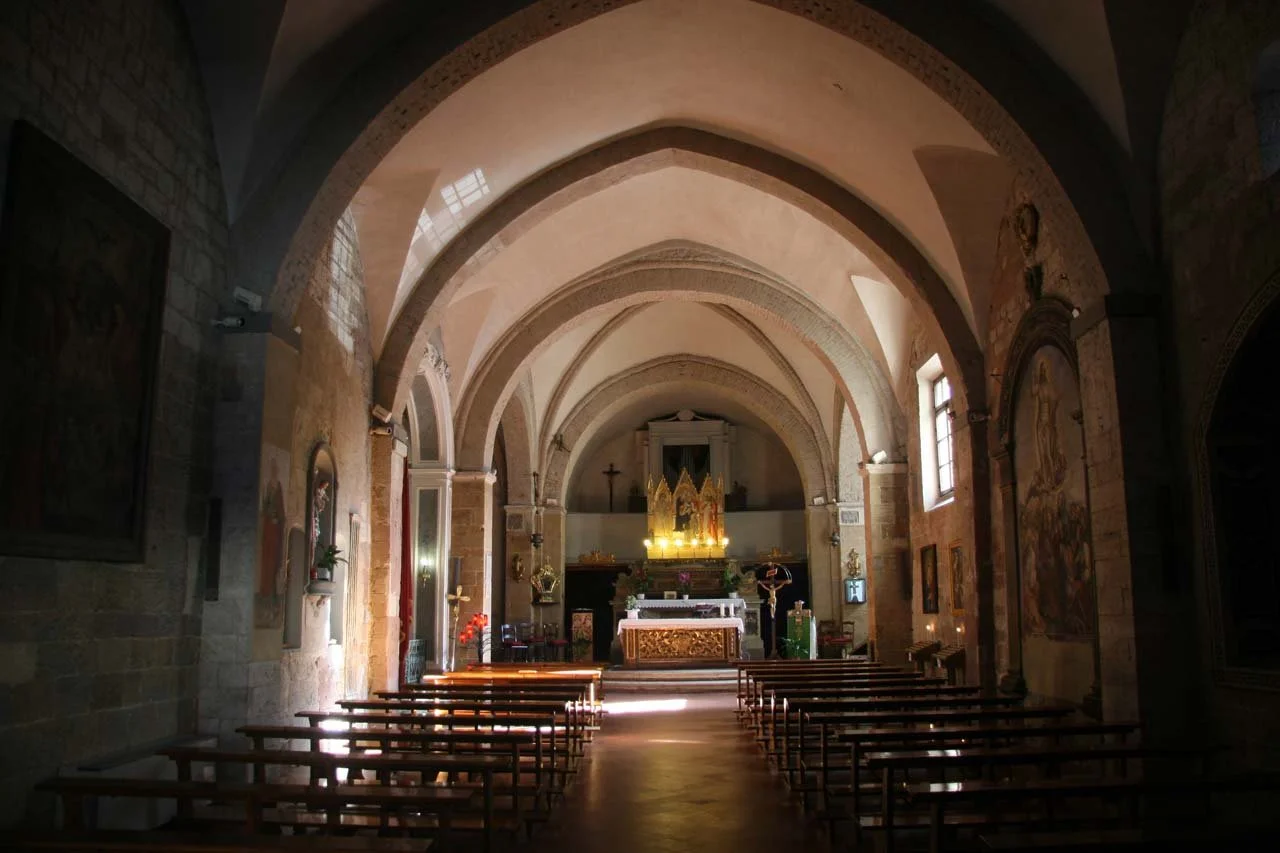
Inside, the single nave and transept contain several important works of art, including a Madonna and Child with Saints by Giovanni di Paolo, a fresco of the Ascension attributed to Sodoma, another Madonna and Child with Saints by Bartolomeo da Miranda, a 16th-century carved wooden urn containing the relics of Blessed Bonizzella, and a terracotta Madonna and Child attributed to Andrea Sansovino.
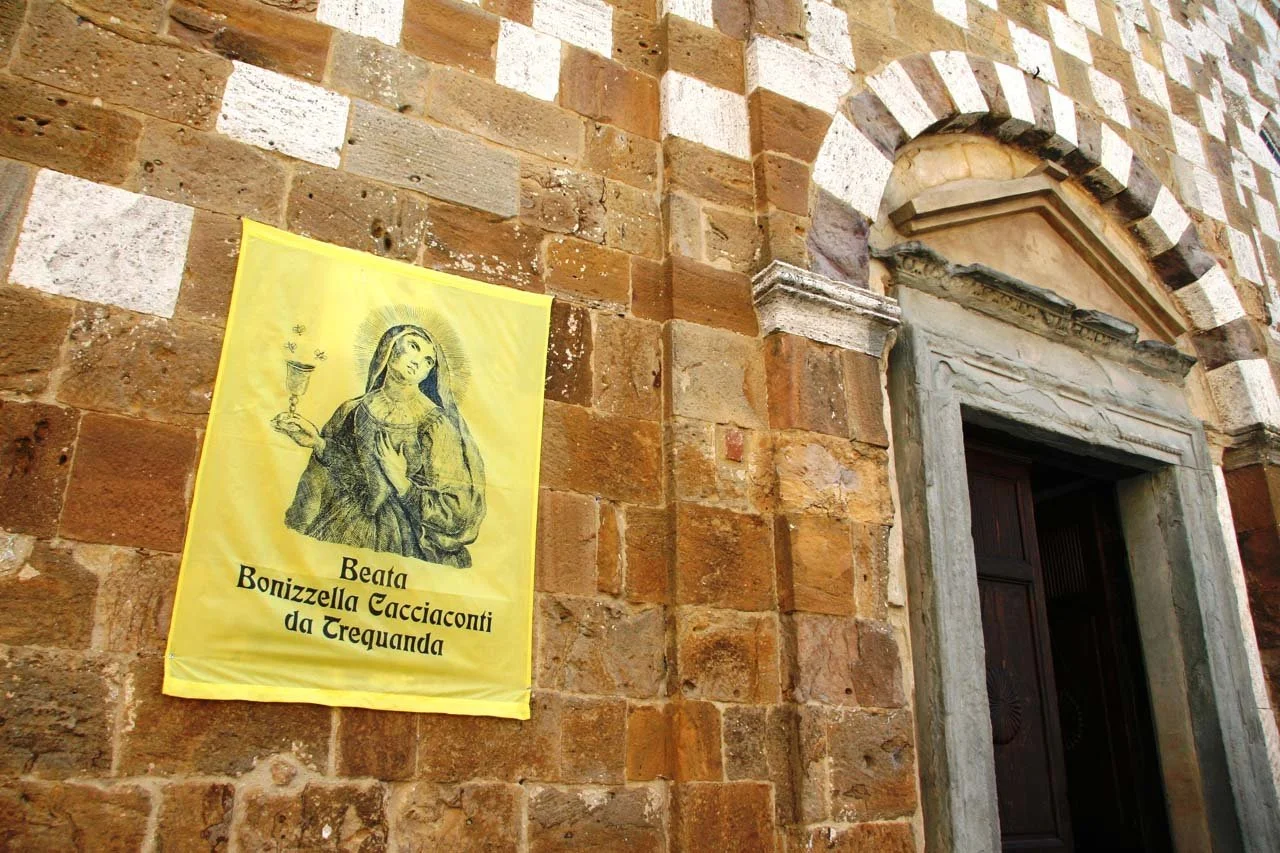
The church also houses the remains of Blessed Bonizzella Cacciaconti, who lived between approximately 1230 and 1300. A member of the powerful Cacciaconti family, she was married to Count Naddo of the Piccolomini family of Corsignano (now Pienza). After her husband’s death, Bonizzella moved to Belsedere, a farm just west of Trequanda that is still in operation today.
Bonizzella devoted much of her wealth to caring for the poor, vulnerable, and wounded. According to tradition, her body was discovered in 1500, entombed within the church wall. The discovery was associated with a swarm of bees and a beeswax cup found in her hands, and numerous miracles have since been attributed to her.
Trequanda honors Bonizzella each year in the second week of May with a pilgrimage to Belsedere and other village celebrations.